Description
Printing Material supplies made-to-order shipping boxes for books, notebooks and stationery assortments. Start with the actual stack: give its length, width and height, the number of items and the complete packed weight. Identify hard covers, spiral bindings, pens or other accessories that create uneven surfaces or need their own position.
Review edges and mixed-item movement
A tight-looking drawing can overlook protruding bindings or the clearance needed to remove a book without catching its cover. Show the desired loading and opening sequence, and identify corners, jackets or printed edges that need attention. For mixed stationery kits, explain which items may move together and which must be separated. Compare the lightest and heaviest proposed combinations before standardising one outer size.
Check labels and the packed proof
Reserve clear areas for an address label, title or stock code, and keep important text away from the final closure. If the box carries retail branding, approve its orientation when the pack is standing and when it is opened. Use a complete sample to review fit, removal and any agreed handling assessment. The board, wrapping or flap arrangement and separate support components are established for the actual contents and distribution method.
For your brief, review corrugated construction and case planning, check artwork and proofing requirements, or compare related packaging applications.
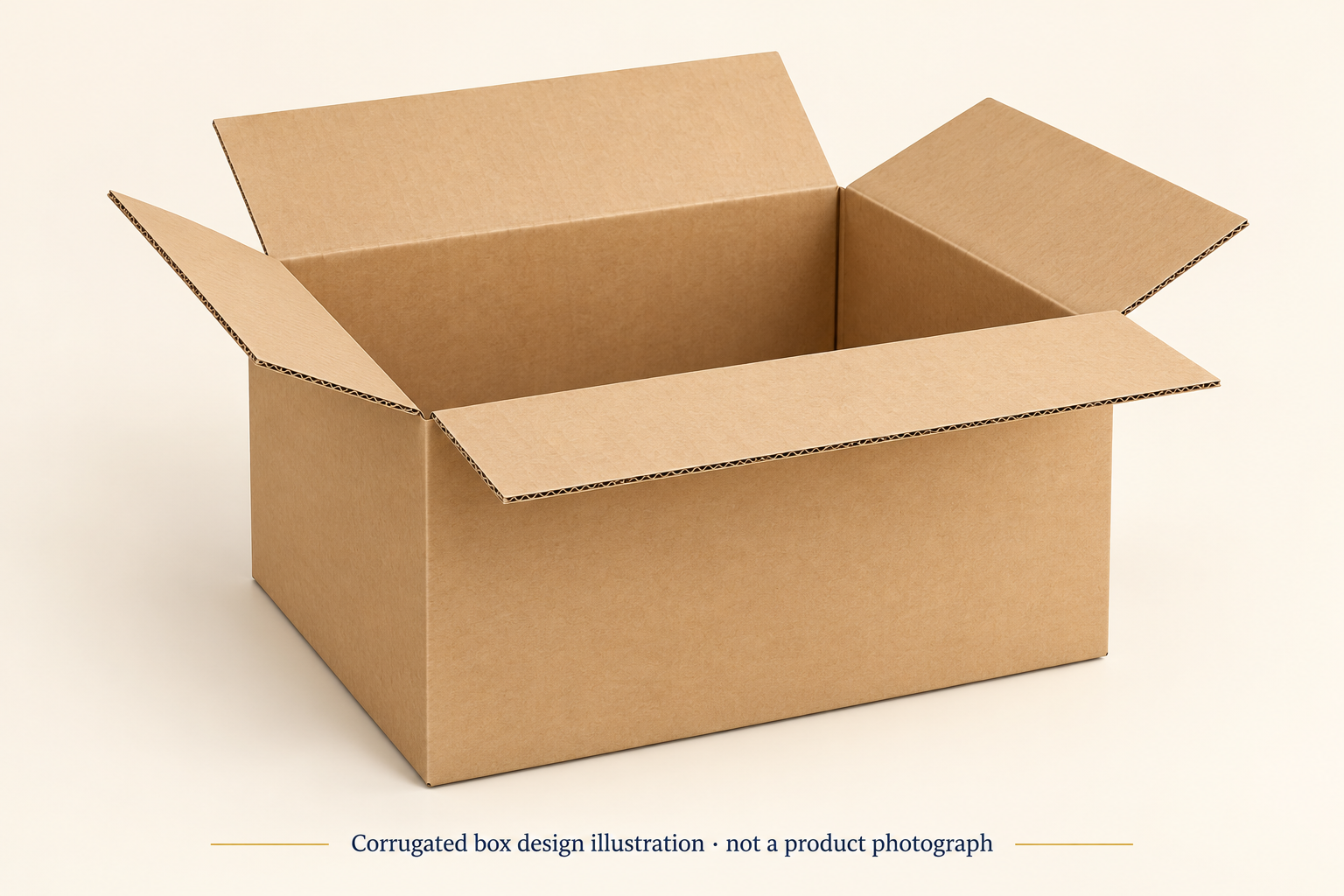
Image reference: Corrugated box design illustration, not a product photograph. The generic carton is a format reference; board, ply, dimensions, print and packing requirements are agreed for the individual application.

Reviews
There are no reviews yet.