
Description
Printing Material supplies made-to-order cartons for furniture hardware, fittings and accessory kits. Provide the part list, dimensions and weight, including the number of bags or inner packs in each carton. Identify exposed screw ends, sharp brackets and finished surfaces, and explain whether the carton is dispatched alone or inside a furniture shipment.
Make the kit easy to load and check
Show which parts are grouped together and which need separation from one another. Review whether concentrated metal loads or loose components could press against a seam or carton wall. Define any inner bags, dividers or surface protection as separate specified components. Describe the packing-station count check and the way an installer or warehouse team should open and identify the kit at the receiving end.
Approve part codes and the packed reference
Agree the placement of assembly references, quantities, barcodes and kit-version labels so similar packs can be distinguished after sealing. Check small text and codes on the intended print or label surface. Review a complete sample for loading, closure, movement and removal, then define any required handling assessment. The selected board and support arrangement follow the actual kit weight and route; reinforcement or carrying performance should not be assumed from the word hardware.
For your brief, review corrugated construction and case planning, check artwork and proofing requirements, or compare related packaging applications.
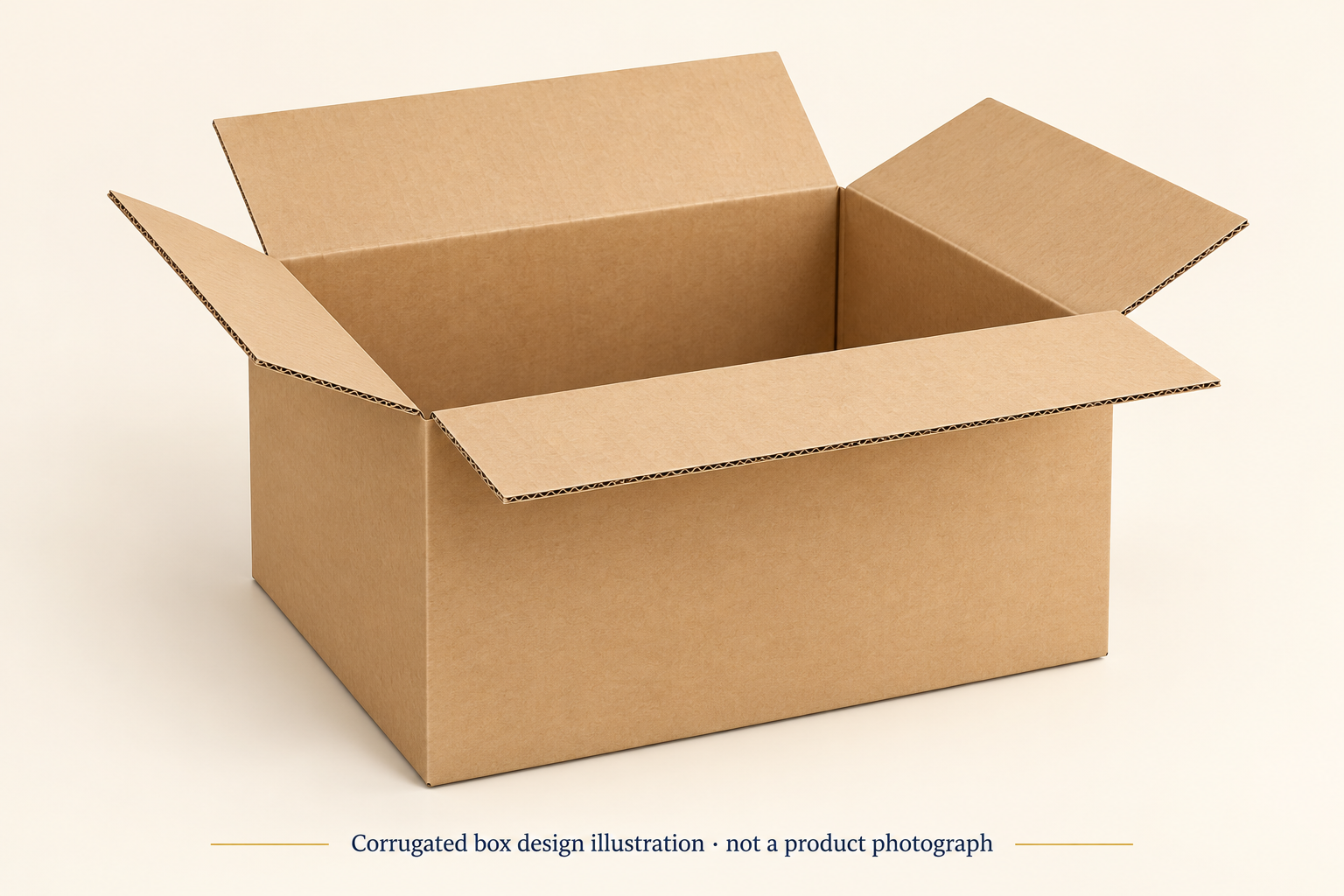
Image reference: Corrugated box design illustration, not a product photograph. The generic carton is a format reference; board, ply, dimensions, print and packing requirements are agreed for the individual application.


Reviews
There are no reviews yet.